Post-Productivity
You cannot automate a promise
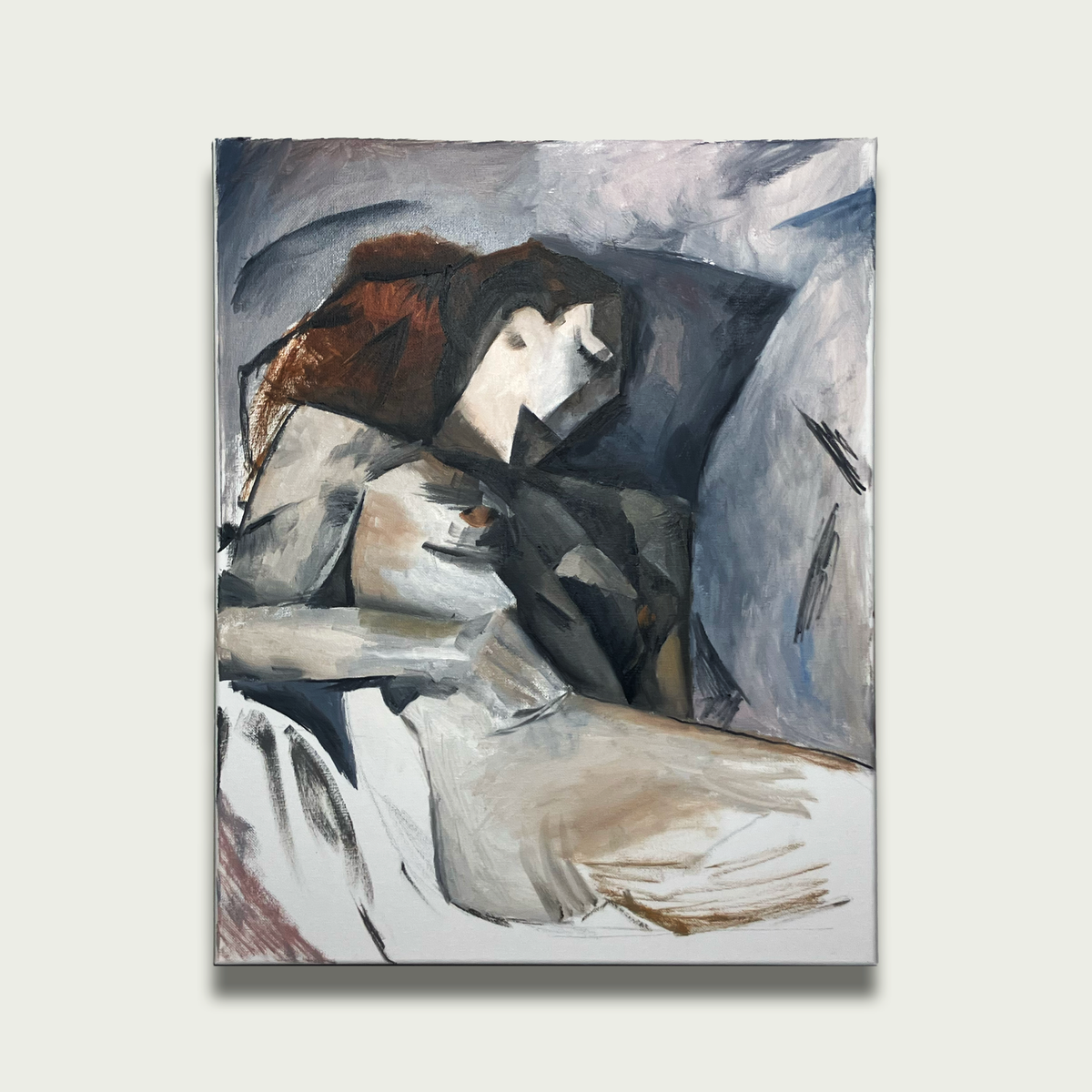
When my grandfather died, I was ten years old, and I wanted to be an architect. I remember thinking: I was supposed to build him a house. Not grief, exactly. More like a broken promise. Death wasn't sad to me — it was the state where you can no longer keep your word.
I didn't think about that again for ten years. In the meantime, I downloaded every productivity app. I time-blocked my mornings. I tracked habits in spreadsheets. I read the books — Atomic Habits, Deep Work, Getting Things Done — and implemented the systems with the desperate precision of someone who believes the right configuration will fix something broken inside him.
It didn't work. Not because the systems were bad, but because I was solving the wrong problem.
Here is what productivity culture never tells you: the opposite of procrastination is not productivity. The opposite of procrastination is the willingness to make a promise.
I know this because I lived the other side. I stopped making promises to myself entirely. I knew I wouldn't keep them, so I stopped trying. No goals, no commitments, no expectations. I sealed myself in a tomb and posted guards at the entrance — and the guards all said the same thing: you're not going to change.
Every morning, I'd think about what I should do. Every evening I'd scroll through my phone in bed, half-guilty, half-numb, having done none of it. Not resting. Not working. Just hovering in the gray space between, where the only activity is calculating how badly you've failed.
If you've used a productivity app, you know this feeling. The checkbox isn't a tool — it's a shield against shame. You clear the list and feel accomplished, but you can't name what you actually moved.
Elon Musk was once asked who the smartest person he'd ever met was. He didn't answer with an IQ score. He reframed the question. To him, intelligence isn't what you know or how fast you think. It's whether you achieved what you set out to achieve. "What did you solve?"
I found this brutal and clarifying. It means intelligence is measured by execution, not capacity. The gap between "I can" and "I did" — that's the gap between potential and intelligence.
This is what I had been leaking. Not time. Not focused. Not discipline. Promise. I had all the capacity and none of the commitment. I could plan a perfect morning routine and never once do it, because planning felt like doing and doing felt like risking failure.
In Korea, when someone falls on the street, everyone looks away. The logic is that you spare them shame by making them unseen. You pretend it didn't happen. But what this really means is that falling is failing, and the only acceptable response to someone else's failure is silence.
I carried this logic into everything. Every unproductive hour was a fall. Every missed promise was a failure I needed to make invisible. I optimized not because I loved the work but because I was terrified of being seen doing nothing.
Then something shifted. Not a system. Not an app. A question.
I'd been asking: what do I need? What do I want? That's the productivity question — identify your goals, optimize toward them, measure output. But the question that actually changed me was different: where am I needed? What can I give?
The difference sounds small. It isn't. The first question has no floor. You can optimize forever and never arrive. The second question has an answer you can act on today. I started looking for where I was needed — freelance contracts I reached out for instead of waiting to be asked, responsibilities I picked up before anyone noticed they were dropped.
I started keeping promises. Small ones. Then the larger ones. Not because I found the right productivity system, but because I stopped asking what I could extract from my time and started asking what I could put into it.
Here is what I now believe: productivity is dying.
Not as a concept. People will always need to do things. But as the dominant metric of human value — the religion of the knowledge worker, the gospel of optimization — that version of productivity is on borrowed time.
AGI is coming. Not in the distant future. Now. And when it arrives, no matter how hard you work to be "productive," you will never match the output of a system that doesn't sleep, doesn't procrastinate, doesn't need to negotiate with itself at 11 PM about whether to set an alarm. Not even close.
The productivity gospel assumes human output is the bottleneck. It isn't. The bottleneck is knowing what's worth doing.
I used to think the answer was taste, insight, risk-taking — the skills no machine can replicate. But that's not quite honest. AI can curate better than most humans. It can connect ideas across domains faster than I ever will. It can even simulate decisions under uncertainty.
What it can't do is lose.
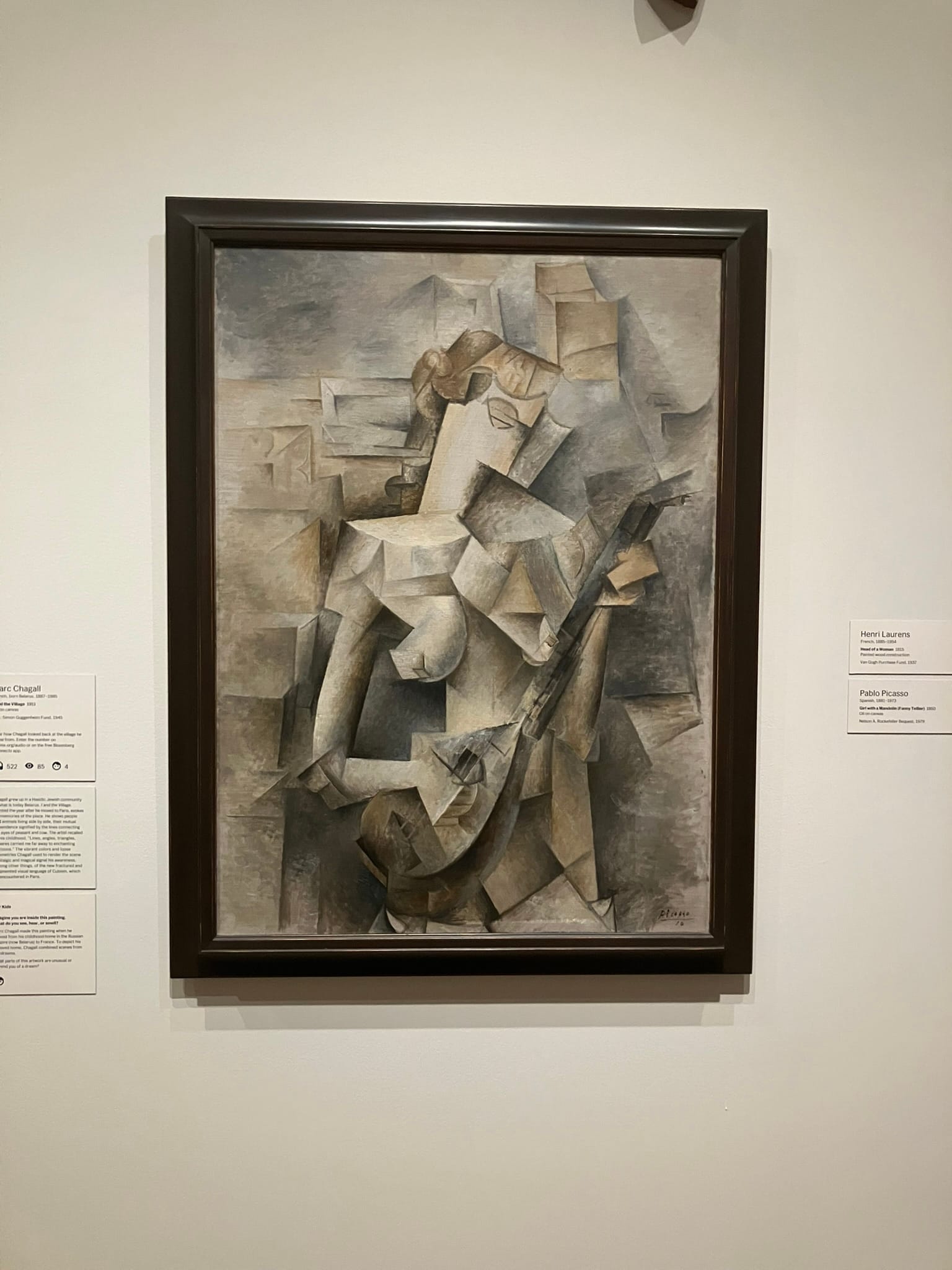
An AI can generate a painting in my style. But it wasn't an AI that stood in front of Picasso's Girl with a Mandolin at MoMA and decided to paint a girl without one. That choice — to answer Picasso, to take the mandolin away and see what remained — cost me a canvas and a week I could have spent on something safer. A machine has no canvas to waste. I do.
An AI can find the link between a psalm about keeping promises and a broken productivity system. It can find ten links I'd miss. But it was my grandfather's death that made one of those links matter enough to build something around. The connection isn't the hard part. Caring, which connection is yours — that's the part that requires a life.
An AI can weigh every outcome and pick the optimal path. But I emailed a freelance client before I had a portfolio, and my hands were shaking, because if they said no, it would be my fault. Not a system error. Not a bug. Mine. Risk isn't a calculation under uncertainty. Risk is having something at stake. And the thing at stake is always the same: you.
That's the one non-delegatable thing. Not a skill. Not a framework. Skin in the game. The willingness to be the person who fails. You can automate taste, insight, and risk assessment. You cannot automate giving a damn.
And giving a damn can only be cultivated — slowly, through the kind of attention that productivity culture actively destroys.
The gateway to giving a damn is the thing we're most afraid of: boredom.
Not boredom as failure. Boredom as practice.
I used to doomscroll because sitting still meant confronting myself. The phone was a shield — same as the productivity app, same as the to-do list, same as the Korean sidewalk where everyone looks away. All of it is designed to avoid the one question that matters: what do you actually want to commit to?
When I finally sat with that question — no app, no system, no shield — I found something I didn't expect. Not a goal. Not a morning routine. A willingness. To make a promise and keep it. To fall in public and stay fallen until someone joins me there.
I know what this looks like in practice. I dropped out of high school to study on my own. I told my parents I had it under control — I had the study schedule, I had the plan. The truth is, I was procrastinating and playing League of Legends. I quit a month before the AP test. I finished a full semester in three weeks — and then nothing. Not even the panic. Just the quiet of having broken a promise to the people who trusted me most, and the slower quiet of realizing I'd known all along I would.
That's productivity culture's final form. Not the hustle. Not the grind. The schedule you build to avoid admitting you were never going to follow it. The system exists, so you can blame the system when you fail.
Cancer is productivity in excess. The body consuming itself. Infinite growth in a finite system. That's your to-do list at 2 AM. That's a study schedule taped to a wall while League loads on the screen.
You can't delegate the self. You can't optimize your way into meaning. You can't productivity-hack a promise into existence.
Descartes said I think, therefore I am. He didn't say I produce, therefore I am.
I think about my grandfather's house sometimes. I never built it. I never will. But somewhere between ten and twenty, I stopped being the kind of person who makes promises like that — reckless, specific, meant. I became the kind of person who downloads apps instead.
I'm making them now. Small ones. A morning where I show up before anyone asks. A canvas where I put the brush down before I know where it's going. A conversation I start instead of waiting to be invited.
None of these is productive. All of them are mine.
Post-productivity isn't a prediction. It's what happens when you stop optimizing and start building the house.