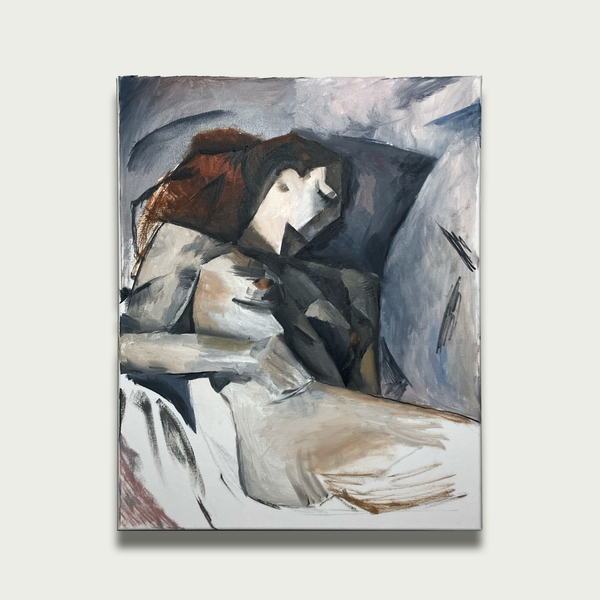
The Garden
Theorizing from absence / presence
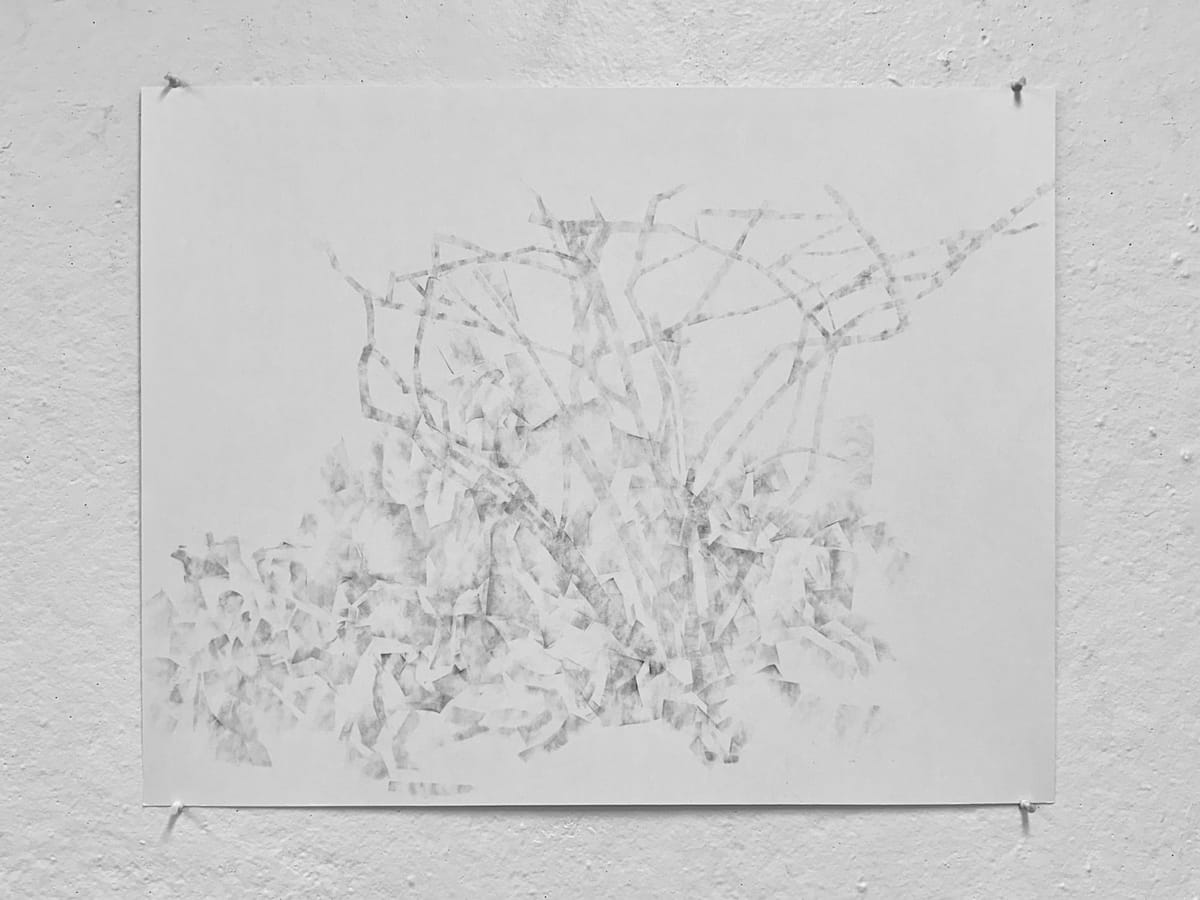
Theorizing from absence
1.
The desk lamp was on and the apartment was quiet and it was past two in the morning. There was no list on paper. There never had to be. The list was always running.
2.
The drawing I had told three people I was finishing. The gym I had not been to in three months. The apartment that had not been cleaned in I no longer remembered how long. The morning prayer I had promised myself, for the sixth time, that I would start. I had said all of it. I had meant all of it. None of it had happened.
3.
It was not a verdict in sentences. It was a Korean obscenity, repeated, in a voice I had been carrying since I was fifteen. I will not write it here. It does not deserve to be aestheticized. You have your own version.
4.
I did not know it then, but I had just published a paper about myself. The data was clean. The methodology was sound. The conclusion was wrong.
5.
What made it durable was that the data was not wrong. The drawing actually was not finished. The gym actually had not been visited. The mornings really had passed unprayed. There is no point at which a careful auditor could have walked through my list and said, the data is fake. The data was not fake. There was simply a great deal more data than I was looking at, and I was not looking at any of it.
6.
I had spent years afraid of becoming a whitewashed tomb — clean on the outside, dead within. I had not noticed that the fear itself was already the inside of one.
7.
There is no clean name in English for the thing I had been doing. People will sometimes call it self-criticism, but the word is too soft. Self-criticism implies a critic and a thing being criticized. What I was doing was more like an autopsy. You can be very rigorous in an autopsy. You will not learn anything about how the person lived.
8.
For years the question had been: why am I like this. why can I not be more disciplined. what is broken in me that I need to fix. All variations of the same examination, all graded against my failures.
9.
At some point a different question arrived, and it did not feel like an answer to the old one. It felt like a different room. What is mine to build? What is the promise I am here to keep?
10.
The first question presupposes the disease. The second presupposes purpose. The first sets up an exam where you are graded on how little you fail. The second sets up a life where you are oriented toward what you are here to keep. One is run from the cemetery. The other is run from the garden.
11.
This is the move. Not a better answer. A different question.
Theorizing from presence
12.
It is the second of May. The thing I am describing started on the fifteenth of March. I am writing this from inside the experiment, not after it. You should believe me less, and read me more carefully.
13.
What changed for me was not discipline. It was a regime. I stopped judging myself. I started problem-solving. When something was not working — the morning, the body, the work, the relationships — I stopped asking what was wrong with me and started asking what was wrong with the setup.
14.
A king does not look at a struggling province and conclude he is unfit to rule. He sends someone to find out why the harvest is failing. He fixes the harvest.
15.
I had been running an evaluation on my soul. I started running an evaluation on my environment, my decisions, my structures, the order I did things in, the company I kept, the hours I rose. The first kind of evaluation produces complaint. The second produces work.
16.
The procrastination did not need to be defeated. It needed a question I could answer.
17.
I read my life now as the early reign of someone who has been given a few small things to keep — a body, a craft, a faith, a few people, a few promises — and is responsible for what happens to them. The kingdom is small. It is supposed to be small at first. It is being built.
18.
A king who only counts the days the kingdom failed has not yet noticed he has a kingdom.
19.
The alarm last week was set for five. I did not get up. I had slept for four hours. The old read would have arrived before I opened my eyes. failed again. can't even keep the morning. who do you think you are. I would have carried it the rest of the day. The new read took longer. It came in the middle of the morning. Why did you only sleep four hours? Fix that. I keep failing. The frame is undefeated. I keep returning to the garden.
20.
There is a way of reading a life that produces, with rigor, only one kind of conclusion. If you walk through a cemetery long enough, take careful notes, weigh the headstones against each other, you will arrive at confident conclusions about the place. The dates will be accurate. The deaths will have happened. You will not have learned anything about how anyone lived.
21.
I used to walk through that cemetery every night and I called it self-knowledge.
22.
I do not anymore. Not because I have stopped seeing the graves — they are still there. The drawing I did not finish this month. The morning I did not pray. The promise that died in transit. I keep a record of all of it. I have just stopped calling the cemetery the whole map.
23.
I told you, much earlier, that I had published a paper about myself. So have you. So has everyone reading this at a desk lamp at two in the morning. The data is clean. The methodology is sound. What did you sample?